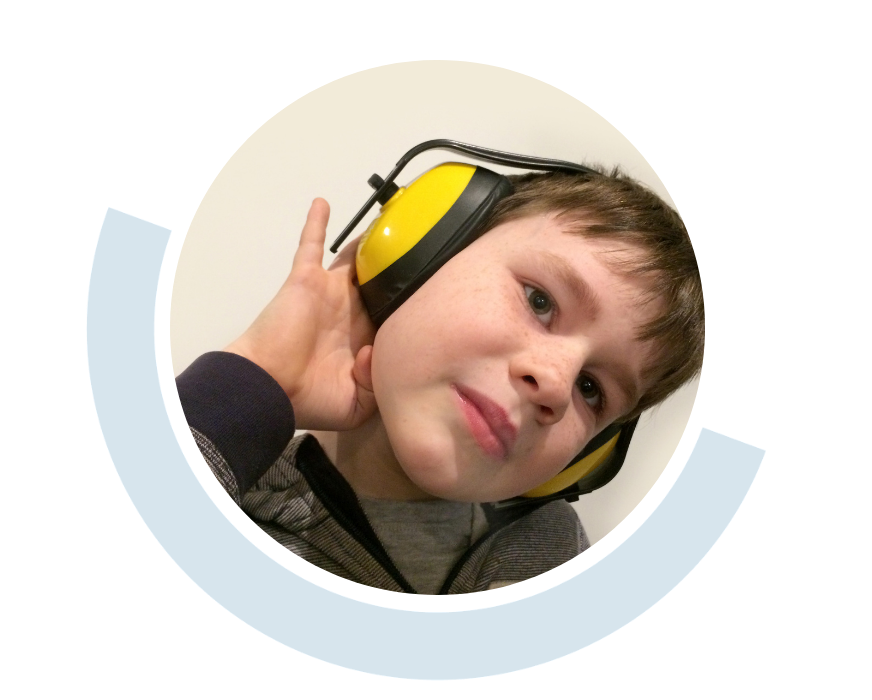
Website header graphic with a pale background and curved light blue accents, featuring a circular close-up of a young child wearing large yellow-and-black ear defenders and resting their head to one side.

Autism — increasingly known in Aotearoa New Zealand as Takiwātanga (meaning “in his/her/their own time and space”) — is a lifelong neurodevelopmental difference. It is a fundamental, natural part of an individual’s identity, shaping how they perceive, think, and interact with the world from early childhood onward.

Some of the areas where Autistic people develop differently to non-Autistic people include:

  • Communication 
  • Socialisation and interaction with others 
  • Thinking and processing  
  • Sensing and perceiving the environment  
  • Moving, playing and having fun 

Autism is a different way of ‘being’ in the world, and can be a source of strength, diversity, and beauty.

Although autism is a spectrum, it is important to understand that this spectrum is not linear. Each Autistic person will have a different set of strengths and challenges. This means we don’t think about Autistic people as fitting somewhere on a spectrum from ‘more’ Autistic to ‘less’ Autistic, or from ‘higher functioning’ to ‘lower functioning’. Instead, an Autistic person’s needs and experiences can change from one day to the next, depending on the environment they are in and how well they are able to cope with day-to-day demands. Autistic people also develop new skills and encounter new challenges as they grow up, just like everyone else. Therefore, functioning labels do not capture the complexity and variability of an Autistic person’s experiences.

Autism is a developmental difference, so an Autistic person’s differences might change or become more or less obvious as they grow up. Autistic people also often have ‘spiky profiles’. This means that the difference between how strong someone’s strengths are and how much they struggle with their weaknesses is more pronounced than it would be in a non-Autistic person. Whilst research and professionals have historically focussed on the challenges Autistic people face, it is also important to recognise and foster Autistic people’s strengths.


The Aotearoa New Zealand Autism Guideline: He Waka Huia Takiwātanga Rau provides evidence-based recommendations on how to support Autistic people throughout their lives. It covers assessment and diagnosis, support for individuals and families, education, mental health and wellbeing, living in the community, professional development, Māori perspectives and perspectives of Pacific Peoples. 


Autism NZ logo with blue text reading “AUTISM NZ” and a green tagline underneath reading “Every step together” on a white background.

Autism New Zealand Inc.

Autism New Zealand provides support, education, and advocacy for autistic people and their whānau. It helps people learn about autism and connect with supports and services; services include workshops, social groups, information, and community support across the lifespan. Autism New Zealand’s Community Links include social groups and local support connections, such as The Connection Club and other regional autism support options.

View Website 0800 288 476 Send Email
Facebook
befree.kiwi logo with a multicoloured butterfly beside blue and black text reading “befree.kiwi,” with smaller grey text underneath reading “independent living solutions.”

befree.kiwi

befree.kiwi is a New Zealand online store specialising in products that support independence, dignity, and everyday function, especially for people with autism and other sensory needs. It sells sensory, mealtime, mobility, continence, and support products from an Auckland base.

View Website 09 3900 403 Send Email
Facebook Instagram
Book Creator from Kami logo with a rainbow-gradient rounded square containing a dotted book outline and scissors icon, above black text reading “BOOK CREATOR” and smaller purple text reading “from kami” on a white background.

Book Creator

Book Creator is a classroom creation tool designed to help learners of all ages and abilities create digital books and other content. It is widely used in inclusive and special education settings because it supports accessible, multimodal creation.

View Website Send Email
Facebook Instagram
Cloud 9 Children’s Foundation logo with a small smiling face inside a blue-outlined triangular shape above blue text reading “Cloud 9 Children’s Foundation” on a white background.

Cloud 9 Foundation

Cloud 9 Children’s Foundation is a New Zealand charitable trust supporting children and teenagers with Asperger’s syndrome and their families, carers, teachers, and professionals. It provides information, guidance, support groups, activities, and community connection, with a strong focus on awareness and practical support.

View Website Send Email
Facebook
do2learn logo with playful multicoloured lowercase lettering on a white background.

Do2Learn

Do2Learn provides educational resources, visual supports, social skills tools, and communication materials, especially for autistic learners and people with developmental differences. It is widely used for printable supports and teaching tools.

View Website Send Email
Facebook
EASe logo with large red serif letters reading “EASe” and small black text underneath reading “electronic auditory stimulation effect” on a white background.

EASe (Electronic Auditory Stimulation effect)

EASe is a listening therapy programme from Vision Play designed to support children with sensory processing difficulties, auditory processing challenges, sound sensitivity, autism, and related developmental differences.

View Website